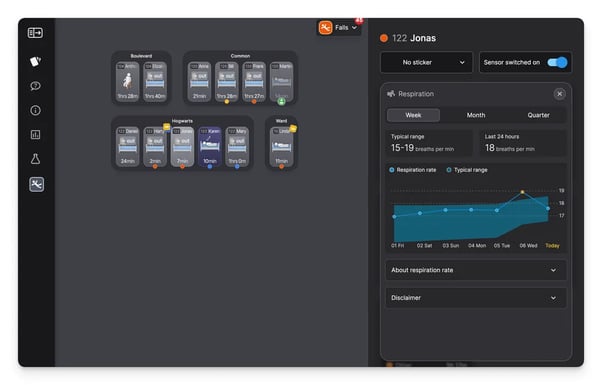
On the respiration widget, we can show you each resident's daily average respiration (or breathing) rate.
Changes in respiration can be an early indicator in illness or general health. You can see what the rate normally is, and if there have been any significant changes.
Respiration rate is closely linked with changes in health status. By tracking RPM over time, the feature helps you identify trends that could indicate potential shifts in the overall health. For example, a trend of higher RPM may prompt a closer look at potential stressors, while a consistently lower RPM could suggest reduced activity levels, signaling a need to review a resident’s routines. These insights support proactive care management, offering an extra layer of attention to residents’ general wellness.
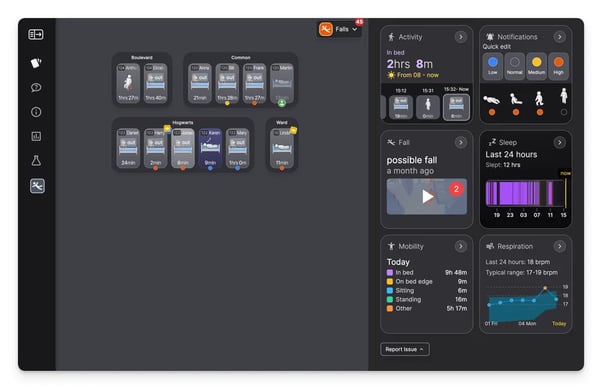
Navigating to respiration on desktop
- Click on a resident and scroll to the respiration view
- Click on the arrow to expand the widget and get access to long term historical respiration data
Respiration in the side panel
Expanded respiration view:
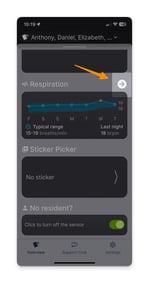
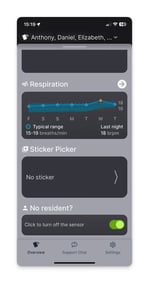
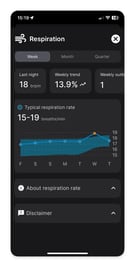
Navigating to the respiration on mobile
- Tap on a resident and scroll down the sheet to find the respiration graph
- If you want more data you can press the white expansion arrow to see their long term respiration
- Inside the expanded page, you can see the resident's average daily respiration on a weekly, monthly and quarterly range
How do we measure respiration?
We measure respiration by seeing the small movements of a residents body when they are sleeping. The rise and fall of their body allows the sensor to measure their respiration. This is the same data that we use to inform whether a resident is sleeping.
Scope of use
This feature is designed to support wellness monitoring and provide insights into the overall health. It does not replace regular health checkups. It should be used as part of a holistic approach to care management, without reliance on it for treatment decisions or diagnostics.